
How to Learn Quran Online: A Complete Step-by-Step Guide for Beginners
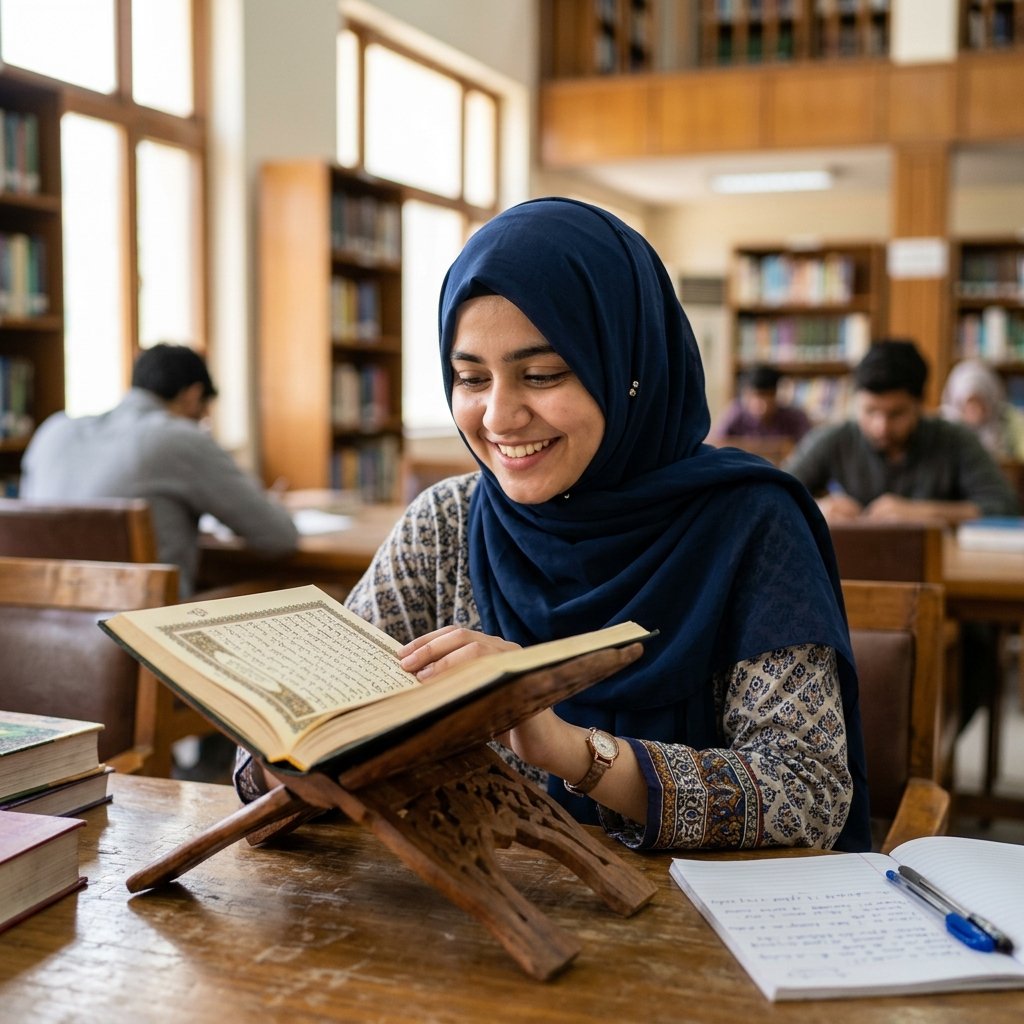
Learning to read the Quran is one of the most rewarding goals a Muslim can set — and today you no longer need to live near a masjid or madrasa to do it. With one-to-one online classes, children, adults and new Muslims all over the world learn to recite the Quran correctly from qualified teachers, from home, at times that fit their routine.
This guide explains exactly how to learn Quran online as a complete beginner: what to study first, how a typical class works, how long it takes and how to choose the right teacher.
The Prophet ﷺ said: “The best of you are those who learn the Quran and teach it.” (Sahih al-Bukhari 5027)
Why learn the Quran online?
- One-to-one attention: the teacher listens to every letter you read and corrects mistakes immediately — something that is hard in a large class.
- Flexible timing: classes can be scheduled before work, after school or late in the evening, in your own time zone.
- Qualified teachers wherever you live: you are not limited to the teachers in your city.
- Comfort and privacy: many adult beginners feel more confident reading in a private session than in a group.
- Consistency: no travel time means fewer missed lessons, and consistency is the secret of progress.
The learning path: what to study, in order
Step 1: Noorani Qaida — learning to read Arabic letters
Every beginner starts with the Noorani Qaida. It teaches the Arabic letters, their correct sounds, joined letters, vowel marks (harakat), Sukoon, Shaddah and Madd step by step. By the end you can read any word in the Quran slowly and correctly. You can also practise with our free interactive Noorani Qaida.
Step 2: Reading the Quran with a teacher
Once the Qaida is complete, students move on to reading from the Quran itself — usually starting with the short surahs of Juz 30 — while the teacher corrects fluency and pronunciation.
Step 3: Tajweed — reciting beautifully and correctly
Allah says: “…and recite the Quran with measured recitation (tartīl).” (Quran 73:4). A Tajweed course teaches the rules of Noon Sakinah, Meem Sakinah, Madd, Qalqalah and the correct articulation points of each letter. Read our beginner’s guide to Tajweed rules for an overview.
Step 4: Memorization, understanding or both
After that, students choose their goal: Hifz (memorization), Arabic to understand the words directly, or Tafseer to study the meanings.
How does an online Quran class work?
- Book a free trial: you meet the teacher, they assess your current level and suggest a plan.
- Choose a schedule: most students take 3–5 classes a week of 30 minutes each.
- Join from any device: classes run on a video platform; the teacher shares the lesson on screen and listens as you read.
- Practise between classes: 10–15 minutes of daily revision makes a dramatic difference.
- Track progress: your teacher records what you covered, your strengths and what to improve, so nothing is forgotten.
How long does it take to read the Quran?
Every learner is different, but as a rough guide for a student taking about four 30-minute classes a week with short daily practice:
- Noorani Qaida: typically 2–6 months.
- Reading the Quran fluently: a further 6–12 months of regular reading with correction.
- Solid Tajweed: grows alongside reading; the core rules can be learned in a few months.
Children often progress quickly because they practise more; adults progress quickly because they understand the rules. What matters most is regularity, not speed.
How to choose the right online Quran teacher
- Qualifications: look for an Ijazah or formal training in Tajweed, and real teaching experience.
- A clear syllabus: the academy should explain the path from Qaida to Tajweed to Hifz.
- Progress reports: you (or parents) should be able to see what was covered and how the student is doing.
- Male and female teachers: many families and sisters prefer a female teacher — see why many families prefer female Quran teachers.
- A free trial: the best way to judge a teacher is a real lesson.
Tips to stay consistent
- Attach your practice to a fixed daily habit, such as after Fajr or Maghrib.
- Read a little every day rather than a lot once a week.
- Listen to a good reciter for the passage you are learning.
- Keep the intention sincere and ask Allah for ease: “My Lord, increase me in knowledge.” (Quran 20:114)
Frequently Asked Questions
Can I learn the Quran online if I don’t know any Arabic?
Yes. Most beginners start with zero Arabic. The Noorani Qaida teaches the alphabet and pronunciation from the very first letter, so no prior knowledge is needed.
Is it too late to learn the Quran as an adult?
Not at all. Many of our students start in their 30s, 40s or later. Adults understand rules quickly, and one-to-one classes let you learn at a comfortable pace.
How many classes per week do I need?
Three to five classes of about 30 minutes each work well for most learners, combined with 10–15 minutes of daily practice.
What do I need to join an online Quran class?
A phone, tablet or computer with a stable internet connection, headphones if possible, and a copy of the Qaida or Quran (the teacher can also share it on screen).
Ready to begin? Book a free trial class and our teachers will assess your level and build a plan for you, in sha Allah.