
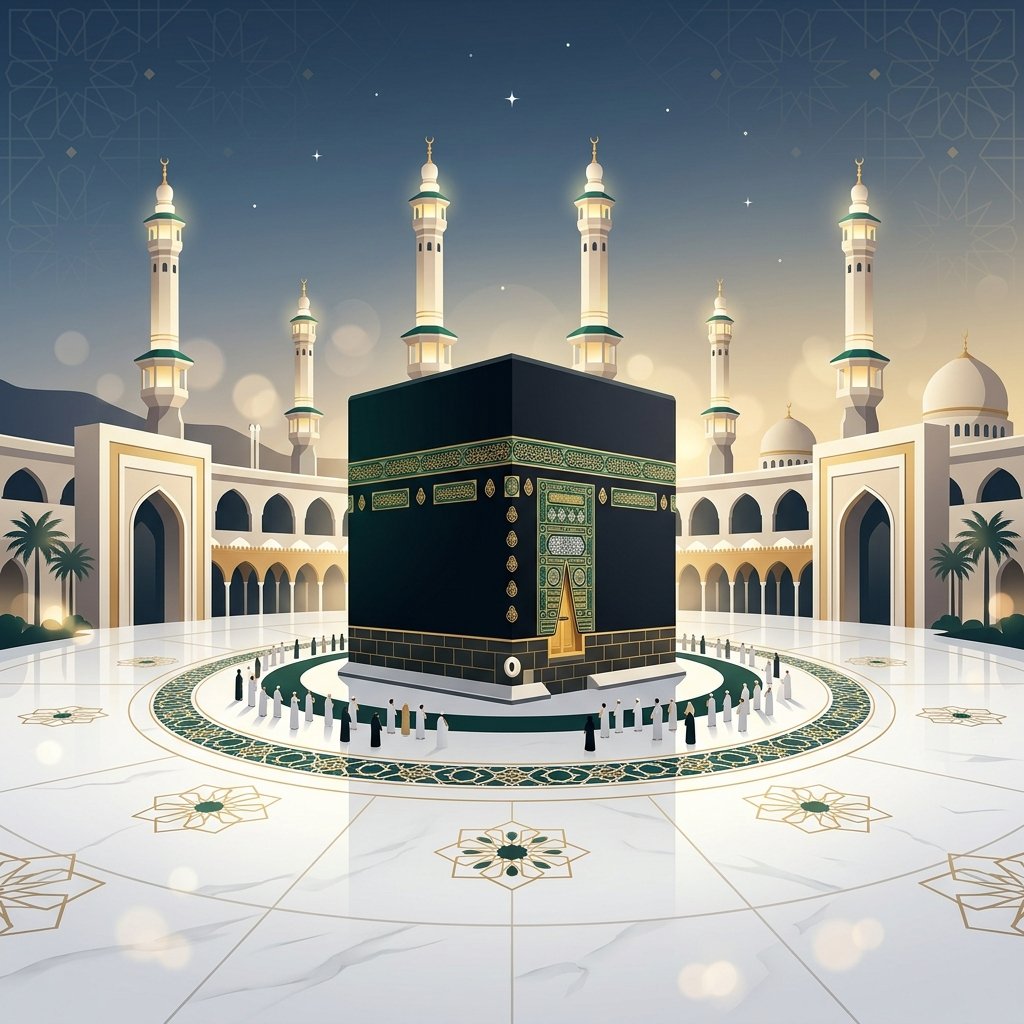
Learn Ahkam-e-Hajj Step-by-Step
A complete timeline-based guide detailing the rituals, days, and rules of performing the Holy Pilgrimage of Hajj.
Understanding Hajj
Hajj is the fifth pillar of Islam, mandatory once in a lifetime for every adult Muslim who has the physical and financial capability (Istita'ah). There are three distinct ways to perform Hajj:
Umrah then Hajj
Performing Umrah first in the Hajj months, exiting Ihram, and then entering a new Ihram for Hajj on 8th Dhul Hijjah. (Recommended for foreign travelers).
Umrah & Hajj Joined
Entering Ihram for both Umrah and Hajj together, and remaining in Ihram continuously without exiting until all Hajj rituals are completed.
Hajj Only
Entering Ihram solely for Hajj, perform no Umrah. Handled mostly by residents of Makkah and surrounding cities.
Chronological Hajj Timeline
Day-by-day sequence of Hajj rituals
Day 1: 8th Dhul Hijjah (Mina)
Start of HajjEnter Ihram from your accommodation, declare your intention (Niyyah) for Hajj, and begin chanting the **Talbiyah**:
"Labbayk Allahumma labbayk, labbayka la sharika laka labbayk. Innal-hamda wan-ni'mata laka wal-mulk, la sharika lak."
"Here I am, O Allah, here I am. Here I am, You have no partner, here I am. Verily all praise, grace, and sovereignty belong to You. You have no partner."
Travel to **Mina**. Spend the day and night in Mina, praying Dhuhr, Asr, Maghrib, Isha, and Fajr of the 9th day.
Day 2: 9th Dhul Hijjah (Arafat & Muzdalifah)
The Great Pillar (Wuquf)**Wuquf al-Arafah**: Travel to the plain of Arafat after sunrise. Listen to the sermon, pray Dhuhr and Asr combined and shortened. Spend the afternoon in intense Du'a (supplication) facing Qibla until sunset.
**Muzdalifah**: After sunset, travel immediately to Muzdalifah without praying Maghrib. In Muzdalifah, pray Maghrib and Isha combined and shortened. Sleep on the ground under the open sky and collect **49 or 70 pebbles** for stoning rituals.
Day 3: 10th Dhul Hijjah (Yawm al-Nahr / Eid Day)
Multiple RitualsThis is the busiest day of Hajj. Complete the following tasks in order:
- Ramy: Throw 7 pebbles at Jamarah al-Aqabah (the large pillar) saying "Allahu Akbar" with each throw.
- Qurbani: Perform or delegate the sacrifice of an animal.
- Halq/Taqseer: Shave (men) or trim 1-inch of hair (women) and exit Ihram. You can now wear normal clothes (First Halal).
- Tawaf al-Ifadah & Sa'ee: Travel to Makkah, perform 7 circuits of Tawaf around Kaabah and 7 rounds of Sa'ee between Safa and Marwah. Return to Mina to sleep.
Day 4 & 5: 11th - 12th Dhul Hijjah (Days of Tashreeq)
Mina StoningStay in Mina. In the afternoon of each day, stone all three pillars: **Jamarah al-Sugra** (small), **Jamarah al-Wusta** (medium), and **Jamarah al-Aqabah** (large) in order, with 7 pebbles each, saying "Allahu Akbar".
Leave Mina before sunset on the 12th of Dhul Hijjah, or stay one extra day (13th) for stoning if desired.
Farewell: Tawaf al-Wada (Makkah)
ConclusionBefore departing Makkah to return home, perform **Tawaf al-Wada** (the Farewell Tawaf) around the Kaabah. This concludes the pilgrimage of Hajj.
Ihram Restrictions
While in the state of Ihram, the following acts are strictly prohibited (Haram):
- Cutting hair, shaving, or clipping nails.
- Using perfumes, scented soaps, or body oils.
- Hunting animals or cutting wild plants.
- Covering the head (men) or face (women).
- Wearing stitched/tailored clothing (for men only).
Virtues of Hajj
"An accepted Hajj (Hajj Mabrur) brings no reward less than Paradise."
— Sahih al-Bukhari
Hajj/Umrah Duas
Learn the correct articulation of Talbiyah, Tawaf Duas, and other prayers under native Arabic certified tutors.
Book a Free TrialPreparing for Hajj or Umrah?
Learn the correct rules of Hajj and Umrah, and perfect your recitation of the Talbiyah and essential pilgrim supplications with native scholars.